Haunted at a Discount: Inside the Thriving Market for Objects That Might Be Trying to Ruin Your Life
The listing reads like a warning label: Victorian mourning brooch, hair intact, previous owner unknown. Acquired from estate sale in rural Ohio. Weird dreams since purchase. Selling as-is. No returns.
It sold in four hours.
Welcome to the cursed object economy — a thriving, only-in-America collision of thrift culture, spiritual practice, content creation, and the deep human suspicion that some things just carry bad energy. It lives mostly on TikTok, bleeds into Etsy and eBay, and has generated a genuinely fascinating subculture of collectors, resellers, cleansers, and skeptics who can't quite agree on what any of it means but keep showing up anyway.
The Algorithm Loves a Creepy Doll
If you've spent any time on TikTok's weirder edges — and if you're reading Fringe Signal, there's a decent chance you have — you've probably encountered the genre. Creator picks up a strange object at a Goodwill. Creator brings it home. Lights flicker. Pet acts strange. Creator films themselves looking deeply unsettled while lo-fi horror music plays underneath. Comments explode with theories, warnings, and requests for updates.
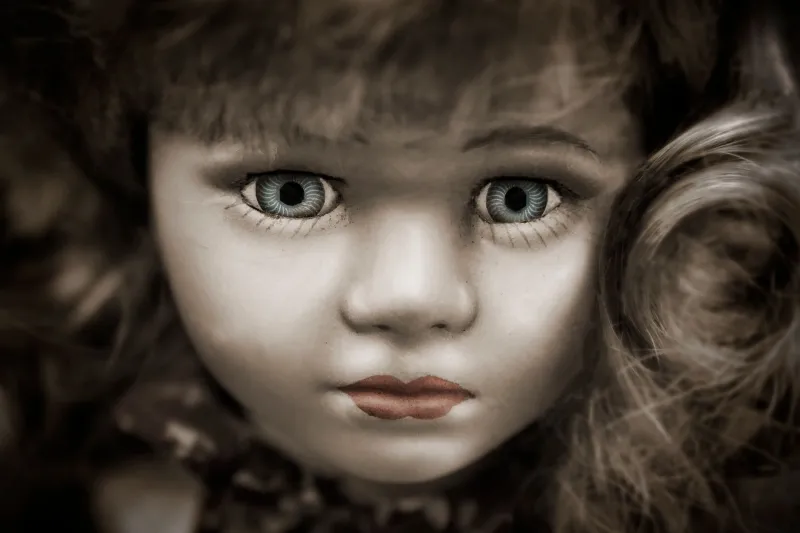
It's a format that plays beautifully to the platform's engagement mechanics. Serialized dread. Accessible stakes. No special effects budget required. A porcelain doll with one cracked eye and a faded dress from 1962 is genuinely more unsettling than most studio horror, and it costs three dollars at a church rummage sale.
But dismissing the whole thing as pure performance misses something real that's happening underneath the content layer.
"I started making videos because it was fun and the algorithm responded to it," admits Dani, a 24-year-old in Nashville who runs a TikTok account dedicated to her growing collection of what she calls "energetically complicated" vintage items. "But I've been into this stuff since I was a teenager. The audience found me because I was already doing the thing — I just started filming it."
Dani's collection includes a mid-century dressing mirror she won't hang in her bedroom, a set of Victorian-era calling cards she believes retain some psychic impression of their original owner, and a child's rocking horse that, she says flatly, moves sometimes when the room is empty. She's not selling any of it. She's the collector end of the market, not the reseller.
The Reseller Ecosystem
On the commerce side, the operation is more openly transactional — and considerably more interesting from an economic standpoint.
Etsy has become a primary marketplace for objects listed with spiritual or paranormal designations. A quick search turns up hundreds of listings: haunted jewelry, spirit vessels, items described as "attached" to specific entities, antique mirrors sold with explicit warnings about their history. Prices range from a few dollars to several hundred, depending on the story attached and the seller's reputation within the community.
The better-known resellers have developed something like a personal brand around their curation instincts. They're not just selling objects — they're selling a narrative, a provenance, a sense that what you're purchasing has a history that extends beyond the physical. It's not unlike how the vintage clothing market sells not just garments but eras, identities, and the romance of objects that have been worn by other lives.
The cursed object market just adds a layer of metaphysical risk to that transaction.
"I think of it as honest marketing," says Marcus, a reseller in his early thirties who operates out of the Pacific Northwest and ships nationally. "I'm not making anything up. I'm telling you what I experienced with this object. If you buy it and nothing happens, great, you've got a cool antique. If something does happen — well, I told you."
Marcus is careful to note that he doesn't personally guarantee any paranormal activity. He's selling the object and the story. What buyers do with that is up to them.
Where Belief Gets Complicated
The people who get most interesting about this stuff are neither the pure entertainers nor the pure merchants. They're the practitioners — the spiritual workers, rootworkers, and folk magic adherents who have been working with the concept of object energy for decades and are watching their tradition get turned into a TikTok genre with complicated feelings.
"There's real knowledge here that's getting flattened into content," says one practitioner in the Southern hoodoo tradition who asked not to be named. "The idea that objects carry energy, that they can be spiritually charged or contaminated — that's not a new idea. That's ancient. But when someone buys a 'haunted doll' because it looks cool on their shelf, they're not engaging with any of that. They're cosplaying."
The tension between authentic practice and aesthetic adoption is one the American occult community has been navigating for a while — WitchTok stirred up similar debates a few years back. The cursed object market adds a commercial dimension that makes those tensions sharper.
But some practitioners see opportunity rather than contamination. Several have built audiences by positioning themselves as spiritual consultants for people who've purchased items that turned out to be more than decorative. Cleansing rituals. Entity communication. Object disposal protocols. It's a service economy built on the assumption that some of these purchases do require professional intervention.
The People Who Swear It Changed Everything
And then there are the collectors who don't fit neatly into any of these categories — the ones who started out skeptical and ended up somewhere else entirely.
Jessica, a 31-year-old middle school teacher in Ohio, started buying "weird old stuff" at estate sales as a hobby during the pandemic. She has no particular spiritual practice and describes herself as "aggressively not superstitious." She bought an ornate wooden box at an auction because it was beautiful and locked and she couldn't find the key.
She found the key six months later, in a coat pocket, in a coat she'd owned for years. Inside the box was a photograph of a woman she didn't recognize and a handwritten note in a language she still hasn't identified.
"I know there's probably a rational explanation," she says. "But I also know that since I bought that box, three separate things in my life shifted in ways I didn't expect. Better ways. I'm not saying the box did it. I'm saying I can't fully rule it out anymore."
That ambiguity — that refusal to fully commit to either explanation — might be the most American thing about this whole market. We want the thrill of the inexplicable, the story, the what-if. We're just not sure we want to actually believe it.
So we buy the doll. We film the flickering light. We sell the experience to a platform that rewards engagement.
And we leave the box locked, just in case.