Signal Lost: The Archivists Hunting the Ghost Broadcasts of Dead TV Stations
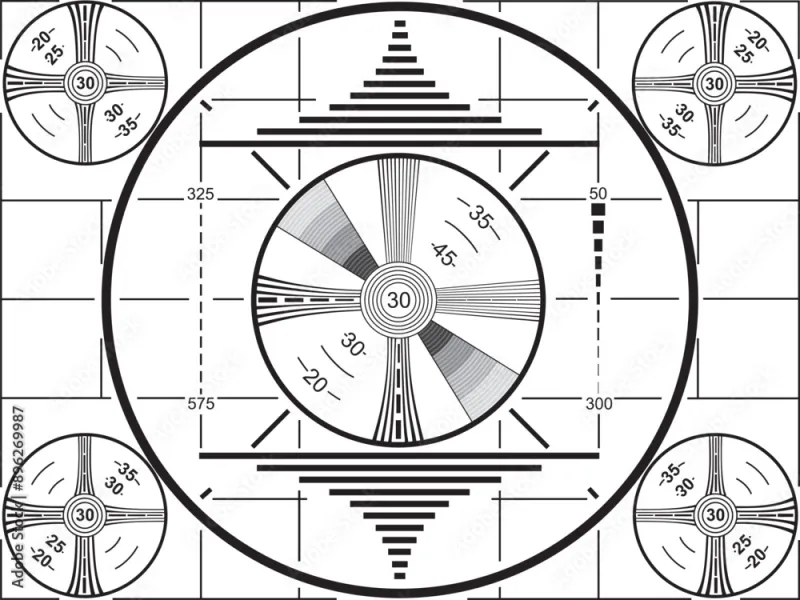
Photo: vintage television test pattern static old broadcast equipment retro, via as2.ftcdn.net
Somewhere in a shared Google Drive that its maintainer updates at odd hours of the night, there are 4,000 entries cataloging the on-air identifications of American television stations that no longer exist. The spreadsheet includes columns for call letters, market, years of operation, network affiliations, and — in a column marked "ID status" — whether a video clip of the station's channel identification has ever been located, verified, or is still considered missing.
The man who built it goes by the username Phosphor_77 on the forums where this community lives. He has been at it for eleven years. He does not consider himself done.
What Even Is a Channel ID?
If you're under a certain age, or if you didn't grow up watching a lot of local TV, the concept of a channel identification might need a quick introduction. For most of American broadcast history, local television stations were required by FCC regulation to periodically identify themselves on air — announcing their call letters, their channel number, and their city of license. These IDs ranged from a simple voiceover against a static logo card to elaborate produced segments: animated graphics, local landmarks, jingles that became weirdly beloved in their markets, footage of the city at golden hour set to synthesizer music that sounds, in retrospect, like the sonic definition of 1983.
The major networks had their own version of this in the form of network IDs and bumpers. But the really interesting material, the stuff that Phosphor_77 and his fellow travelers are after, comes from the margins: the UHF stations that served mid-sized markets in the 1970s, the regional cable channels that launched with enormous ambition and folded within three years, the religious broadcasters and Spanish-language independents and home shopping hybrids that occupied the far end of the dial and rarely made it into any archive worth mentioning.
These stations existed. They broadcast into living rooms. They shaped local media landscapes in ways that are genuinely difficult to reconstruct. And then they disappeared, and almost nobody wrote it down.
The Archive That Wasn't
Here's the uncomfortable truth about American television history: it's riddled with holes. The Library of Congress has done heroic work, and the Paley Center for Media holds significant collections, but the institutional preservation apparatus was built around prestige programming — network dramas, news broadcasts, landmark documentaries. The channel ID that aired on WKBD Detroit at 2 PM on a Tuesday in 1977 was not anyone's preservation priority.
For the community that has coalesced around dead stations and lost broadcasts, this institutional neglect is both the problem and the motivation. "Wikipedia has a stub for maybe one in ten of the stations I'm interested in," says one collector who focuses specifically on defunct cable channels from the 1980s and early 1990s. "And even the stubs are usually wrong about something. The dates are off, or the network affiliation history is incomplete, or they've got the call letters confused with a different station in a different market."
This is where the community comes in. Through a combination of eBay hunting for old VHS tapes (home recordings from the era are often the only surviving footage of local broadcasts), digitization drives, outreach to former station employees, and painstaking cross-referencing of FCC records that are technically public but practically inaccessible to anyone without serious archival patience, these collectors are building what might be the most comprehensive record of peripheral American television that exists.
Test Patterns and Transmission Logs
The objects of obsession in this community are specific and, to outsiders, perhaps baffling. Test patterns — the geometric cards that stations broadcast during off-air hours to allow technicians to calibrate their receivers — have their own dedicated collectors who can identify a station's era, equipment chain, and sometimes even its chief engineer from the particular variant of the Indian Head or SMPTE color bar pattern they used. Transmission logs, the legally required records of everything a station broadcast on a given day, are another holy grail: they're dry documents, essentially just time-stamped lists of program titles and IDs, but they can confirm or refute claims about what actually aired and when.
"A transmission log is like a station's diary," says one archivist who has been requesting them from state broadcast archives for years. "Most of them got thrown away. The ones that survive are these incredible artifacts. You can see exactly what a station was doing at three in the morning in 1974."
What were they doing? Often: replaying old films on a loop. Airing infomercials before the word existed. Broadcasting religious programming to an audience of insomniacs and shift workers. Filling dead air with the kind of content that nobody was supposed to be watching, which means nobody thought to save it, which means it's almost entirely gone.
Why This Matters (And Why It Doesn't Have To)
The easy argument for why this community's work matters is the historical record argument. Local television shaped American culture in ways we're still sorting out. Regional accents in broadcasting, local political coverage, the specific texture of a city's media identity in a given decade — all of that lives, partially, in the broadcasts that these stations produced. Losing the record of those broadcasts is a genuine cultural loss.
But there's a harder, more honest argument that the community members themselves often make: this stuff is interesting because it was minor. Because it wasn't preserved. Because the official record decided it wasn't worth remembering, which means recovering it is a small act of defiance against the way institutional memory decides what counts.
"I'm not saving Shakespeare," Phosphor_77 wrote in a forum post that gets quoted a lot in this community. "I'm saving the call sign of a UHF station in Fresno that ran for eight months in 1981 and nobody remembers. That's exactly why it needs saving."
There's something deeply Fringe Signal about that logic. The signal was always there. It just needed someone stubborn enough to go looking for it.