Transmit Anyway: The Bedroom Pirates Hijacking the Airwaves One Illegal Broadcast at a Time
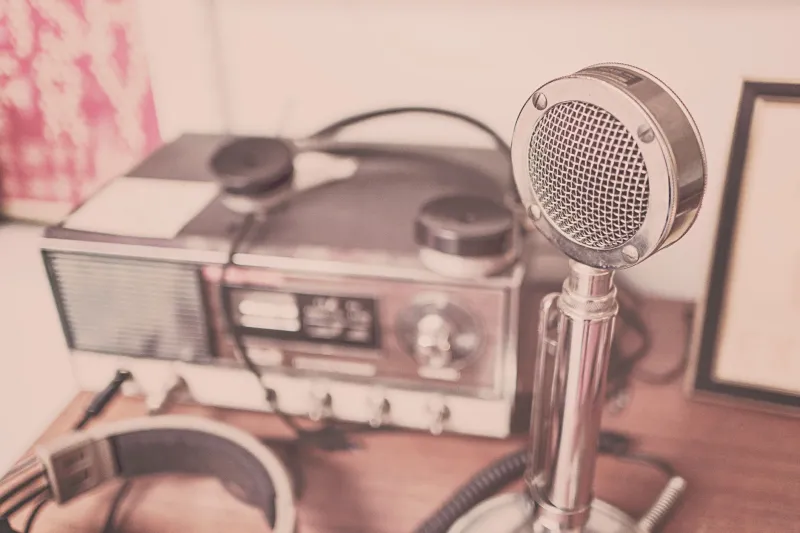
Somewhere between the classic rock station and the Christian talk block on your FM dial, there's a gap. Not static, exactly — something more intentional than that. A voice, maybe. Some music you've never heard before. A weird reading of a stranger's diary entries over a bed of ambient drone. If you caught it, you probably thought your radio was malfunctioning.
It wasn't.
America has always had pirates on the airwaves. From the rogue broadcasters of the 1960s to the hip-hop stations that rewired New York neighborhoods in the '80s and '90s, unlicensed radio has never fully gone away. But something is shifting in the current moment. A new generation of operators — young, politically charged, often deeply weird in the best possible way — is quietly taking to the FM band from bedrooms, basements, and the backs of converted vans. And they're doing it with a level of technical sophistication that's making the FCC's job considerably harder.
The Setup
The gear is cheaper than you'd think. A basic FM transmitter capable of reaching a few city blocks runs anywhere from forty to a couple hundred dollars online. Add a laptop, an audio interface, a decent microphone, and some basic signal-boosting know-how, and you've got a broadcasting operation that would've seemed like science fiction to the pirate operators of previous decades. The barrier to entry has essentially collapsed.
"I spent maybe three hundred dollars total to get started," says one operator who goes by the handle Margaux Static and broadcasts from a mid-sized city in the Midwest she'd prefer to keep unspecified. "The hardest part wasn't the equipment. It was figuring out where to transmit without stepping on something that was already there."
That spatial awareness — the knowledge of who's broadcasting where and at what wattage — is part of the informal education every pirate goes through. There are online communities, encrypted group chats, and a surprisingly robust oral tradition passed between operators about how to find dead air, how to stay mobile, and how to read FCC enforcement patterns in your region.
Why Bother?
The obvious question is: why radio? In an era when anyone can launch a podcast for free, spin up a Spotify playlist, or stream live to a global audience with nothing but a phone, why would anyone take on the legal risk of unlicensed broadcasting for an audience that might be a few hundred people at most?
The answers, when you actually talk to the people doing this, are more layered than you'd expect.
For some, it's explicitly political. "Spotify and Apple Music and all of them — they're just another version of Clear Channel," says a broadcaster who operates out of Phoenix under the name Desert Frequency. "The algorithm decides what gets heard. I'm not interested in the algorithm. I want the person driving home from their second job to accidentally catch something real."
For others, the appeal is almost ritualistic — something about the intimacy of radio that streaming can't replicate. There's no skip button on an FM broadcast. No recommendation engine. No listener data being harvested and sold. You tune in, and whatever's happening is happening in real time, and it vanishes the moment the transmission ends. That ephemerality, counterintuitively, feels like freedom.
Margaux Static puts it a different way: "I wanted to make something that couldn't be saved. No archive, no algorithm, no record of it. Just — it existed, and then it didn't. That felt important to me."
The Art of Not Getting Caught
The FCC does enforce. It issues fines, it seizes equipment, and in cases involving significant interference with licensed broadcasts or aviation frequencies, it can pursue criminal charges. The agency isn't omnipotent, but it's not toothless either.
Pirate operators have developed a range of countermeasures, some technical and some behavioral. Keeping transmission wattage low — under a watt in dense urban areas — limits range but also dramatically reduces the likelihood of detection. Moving the transmitter location regularly, sometimes weekly, prevents enforcement agents from triangulating a signal source. Broadcasting during off-peak hours, particularly late at night, reduces the chance of generating complaints from licensed operators.
More sophisticated setups involve separating the transmitter from the studio location entirely, using a remote trigger system so the operator is never physically present at the point of transmission. This kind of arrangement requires more investment and technical knowledge, but it's increasingly common among operators who've been at it for more than a year.
"The FCC has limited resources," says one operator who's been broadcasting in the Southeast for nearly four years. "They prioritize interference complaints. If you're not messing with a licensed station and you're not on aviation frequencies, you're pretty low on the list. That doesn't mean you're safe. It means you have time."
Community as the Real Signal
What gets lost in the legal and technical conversation is the community dimension of what these operators are building. Several of the pirates I spoke with described their broadcasts as anchors for small, real-world communities — neighborhood regulars who tune in at predictable times, local musicians who get airtime they'd never find elsewhere, listeners who leave voicemails or show up at undisclosed listening parties.
In this sense, the bedroom pirate scene has more in common with public access television in its heyday than with any streaming platform. It's hyperlocal in a way that the internet, for all its connective power, often fails to be. You can't accidentally stumble onto a Spotify stream while driving through a specific neighborhood. You can accidentally stumble onto a pirate broadcast, and that accident — that unplanned encounter with something strange and local and alive — is exactly what these operators are after.
Desert Frequency hosts a weekly segment where anonymous listeners call in to describe a place in Phoenix that means something to them. Not a landmark, not a restaurant — just a place. A corner, a parking lot, a stretch of canal. "It's the most popular thing I do," he says. "People are starving for that kind of thing. To be seen in a specific place."
The Signal Persists
Nobody doing this is getting rich. Nobody is building a brand. The whole enterprise runs on the logic of doing something because it matters to you and maybe to a small, specific circle of people who happen to be within range.
That logic — niche, local, stubbornly analog — feels increasingly countercultural in a media landscape that optimizes relentlessly for scale. The bedroom pirates aren't trying to compete with iHeart Radio. They're trying to make something that iHeart Radio structurally cannot make: a broadcast that belongs to a place, a moment, and a handful of people who were paying attention.
Flip through your FM dial late some night. Linger in the gaps between the stations you recognize. You might catch something.
If you do, don't try to save it. That's the whole point.