Pick Up the Phone: How Teenagers Are Building Secret Communities One Voicemail at a Time
There's a phone number circulating in certain corners of the internet — passed through encrypted DMs, scrawled on the backs of zine inserts, whispered at shows — that you can only call between 9 p.m. and midnight on Tuesdays. If you dial it outside that window, you get a busy signal. If you dial it at the right time, you get a recorded voice reading what sounds like a grocery list. It is not a grocery list.
This is the new telephone underground, and it's weirder and more deliberate than you'd expect.
Not Your Grandma's Party Line
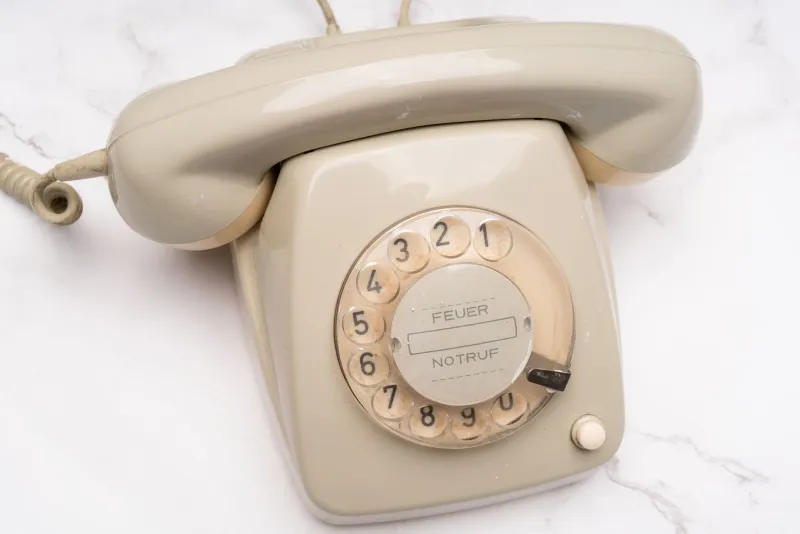
The image of teenagers glued to their smartphones is so baked into the cultural conversation that most people never stop to ask: which features of the smartphone are they actually using? Because a growing, quietly organized slice of Gen Z has made a conspicuous choice to route around the apps entirely — no Instagram DMs, no Discord servers, no group chats — in favor of something much older. Answering machines. Voicemail systems. Telephone trees. Message hotlines that run on hardware you could find at a Goodwill for six bucks.
Call it analog insurgency. Call it phone phreaking's anxious younger sibling. Whatever you call it, it's real, it's spreading, and the people running these systems are remarkably thoughtful about why they're doing it.
"Every text I send on my iPhone is a data point," says a nineteen-year-old who operates a message hotline out of her apartment in Albuquerque — she asked to be identified only as Petra. "Not just to Apple. To advertisers, to whoever buys that data downstream. A voicemail on a landline that I physically own? That's mine. Nobody's training a model on it."
Petra's system is relatively simple: a vintage answering machine plugged into a landline, with a rotating access number she shares through a printed newsletter she mails to about forty subscribers. Callers leave messages. She curates them, sometimes responds, sometimes forwards particularly interesting ones to a small list of trusted listeners. The whole thing runs on about twelve dollars a month.
The Architecture of Intentional Smallness
What makes these phone networks distinct from, say, just calling your friends, is the deliberate structure built around them. Operators — and that's what they call themselves — design systems with rules, rituals, and in some cases, light cryptography.
One network operating out of the Pacific Northwest, which its founders call the "Switchboard," uses a tiered access model. New callers get a general message line. Regulars who've proven themselves — through consistent participation and vouching from existing members — get access to a second number that hosts more personal, unfiltered content. The innermost tier is invitation-only and changes numbers every few weeks.
"It's not paranoia for the sake of paranoia," says Marcus, a twenty-one-year-old college student in Portland who helped design the Switchboard's structure. "It's just that intimacy requires friction. If anyone can access something instantly and for free, it doesn't feel like yours. The phone system creates a sense of place."
That language — sense of place — comes up constantly in conversations with people embedded in this subculture. There's a genuine grief underneath the technical tinkering, a mourning for what the internet felt like before it became a surveillance apparatus optimized for engagement. The telephone, paradoxically, offers something the smartphone no longer can: the feeling of a private room.
Coded, but Not Always Mysterious
The coded message aspect — the grocery lists that aren't grocery lists, the weather reports that mean something else — ranges from practical to theatrical depending on who you're talking to.
Some operators use light substitution ciphers to share event information: a reading series, an underground show, a meetup in a park. The coding keeps the content from being easily indexed if someone stumbles onto the number and starts recording calls. Others lean harder into the aesthetic, treating the cipher as part of the experience, a way to make participation feel earned.
"There's a hotline I call that does a fake radio drama," says Dominique, an eighteen-year-old in Chicago. "Like, fully produced, with characters and a plot that continues week to week. But hidden in the dialogue are real announcements about events. You have to actually listen to catch them. It's the best thing I've encountered on any platform, and it exists on a phone line."
This fusion of art project and functional communication network is one of the more striking features of the scene. These aren't purely utilitarian systems, and they're not purely performance pieces. They occupy a middle space that the mainstream internet has largely stopped making room for.
The Nostalgia Question
It would be easy — and a little lazy — to frame all of this as nostalgia. Gen Z discovering the aesthetic pleasures of analog technology, the same impulse that drives vinyl sales and film photography. And that element is definitely present. Several operators described getting into phone systems after watching YouTube videos about phone phreaking history, or finding old answering machine message compilations on archive sites.
But the people actually running these networks push back on the nostalgia frame pretty hard.
"I wasn't alive when any of this was normal," Petra points out. "I'm not trying to recreate something I remember. I'm using an old tool because it does something current tools won't do, which is stay out of my business."
The data privacy concern is genuine and specific. Several operators cited the revelation that major platforms use voice data to train AI models, or referenced the broader ambient dread around how much behavioral data is harvested from smartphones. The telephone system isn't chosen because it's retro. It's chosen because it's legible — you can understand exactly what it does and doesn't do.
Finding the Signal
The challenge, obviously, is discovery. How do you find a secret phone network if you're not already in the loop? The answer, somewhat ironically, involves the very digital infrastructure these communities are trying to escape. Numbers get passed through encrypted messaging apps, zine communities, and small subreddits. Word of mouth at physical events — shows, markets, community meetups — is apparently a major vector.
Some operators have started listing their numbers on Neocities pages, the contemporary home of the old-school personal web. A few have printed numbers on stickers and left them in the wild: record stores, laundromats, the inside covers of used books.
"The discovery process is part of the point," Marcus says. "If you found it, you were probably looking for something like it."
That logic — that the friction of finding something is what makes it worth finding — feels like the thesis of the whole movement, if you can call it that. In an era of algorithmic delivery, where content is pushed at you based on what you've already consumed, there's something genuinely countercultural about a community that requires you to actually seek it out.
Pick up the phone. Listen carefully. Leave your message after the beep.
Somebody out there is waiting to hear it.