Side A Is a Secret: Inside the Unlabeled Cassette Swap Keeping Analog Weird
The Envelope Arrives
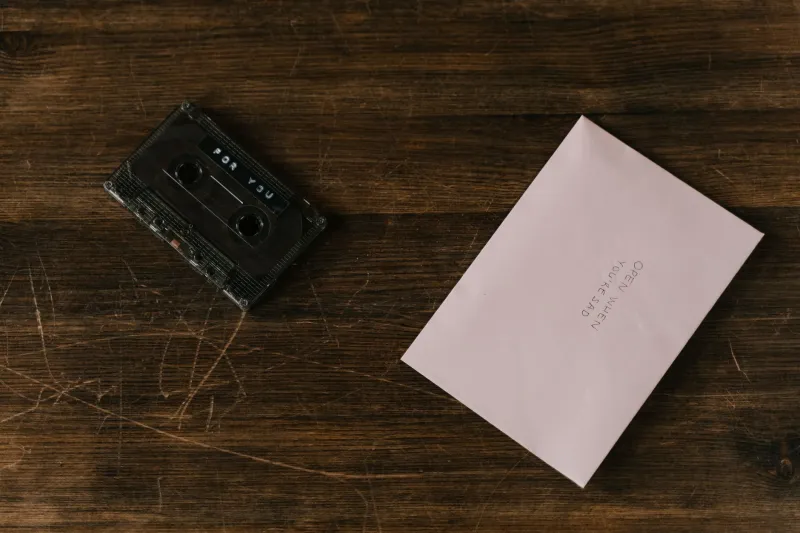
It shows up in a padded envelope with no return address and a cassette inside that has no label. No tracklist. No artist name. No genre tag. Just a length of tape and a mystery. You put it in a deck, press play, and wait to find out what a stranger decided you needed to hear.
This is the mystery tape exchange, a loose network of people who trade unlabeled cassettes through the mail. The rules are simple: record something, send it to a stranger, don't explain it. Participants swap field recordings, ambient experiments, half-finished songs, audio collages, and things that are hard to categorize even after you've listened to the whole thing. In 2026, the scene is small but growing, with traders in cities like Portland, Austin, and Asheville, plus a steady international trickle.
Rules of the Swap
The etiquette varies by group, but the core principle is the same: the tape should speak for itself. Some exchanges ask for a single handwritten note with no more than a sentence—something like "Recorded in a stairwell" or "For a rainy afternoon." Others allow no note at all. Tracklists are discouraged. Genre descriptions are discouraged. The point is to receive something without context and let your ears do the work.
Most swaps run on a monthly or quarterly schedule. You get a name and address, you make a tape, you mail it. Sometimes you get one back. Sometimes you don't. The low stakes are part of the appeal. There's no rating system, no follower count, no algorithm measuring your performance.
Why Analog Discovery Feels Different
Streaming algorithms are very good at giving you more of what you already like. They are less good at giving you something you didn't know you needed. The mystery tape exchange does the opposite. You can't skip. You can't see what's coming. You have to flip the tape and listen to the whole side, hiss and all.
That forced patience changes the way you hear. A field recording of a dishwasher might become fascinating if you can't fast-forward. A wobbly keyboard loop might feel like a message from a friend. The imperfections—the wow and flutter, the room noise, the abrupt edits—are not flaws. They're signatures. They tell you a human being made this, and that human being was probably sitting in a room somewhere, trying to make something out of the day.
The Joy of Not Knowing
Participants trade stories about the tapes they've received. One person got forty-five minutes of a man walking through a Walmart, narrating the aisles. Another received a cassette of a family reunion in a language they didn't speak. Someone else got a tape that was just rain, recorded from a window, with a dog barking once near the end. These are not masterpieces in the conventional sense. They're documents. They're gifts.
"It's not about quality," says a trader in Portland who has been swapping tapes for two years. "It's about presence. Someone took the time to record this and mail it to me. That's the whole thing."
The exchange also creates a different kind of relationship. You don't know the person's face or their real name. You know their audio sensibility. You know what they thought was worth capturing. Over time, you might start to recognize their handwriting on the envelope, or the way they label their tapes with a single dot. It's a friendship built from sound.
Creative Resistance, Low Stakes
The mystery tape exchange is not a mass movement. It's not trying to be. It's a quiet, stubborn practice that exists outside the attention economy. There's no monetization strategy. There's no growth hack. There's just a blank tape, a stranger's address, and the postal service.
That low-stakes quality is what makes it feel like a form of creative resistance. You don't have to be good. You don't have to promote yourself. You just have to make something and send it. The person on the other end might love it. They might be confused. They might never listen. But the act of making and mailing is its own reward.
Fringe Signal's whole beat is the weird and wonderful convergence, and this is both. It's a network of strangers connected by analog tape and a shared willingness to be surprised. It's music discovery without the algorithm, community without the platform, and art without the audience metric.
How to Join
Getting involved is straightforward. Look for cassette exchange groups on small forums and mailing lists. Buy a pack of blank tapes. Find a deck at a thrift store or use the one in your parents' basement. Record something—anything—and mail it to the address you're given. Don't overthink it. The best tapes are often the ones that feel like they were made in an afternoon.
You don't need a follower count. You need a blank tape and a stranger's address.