Live and Unlicensed: Inside the Shadow Economy of Bootleg Concert Tape Trading
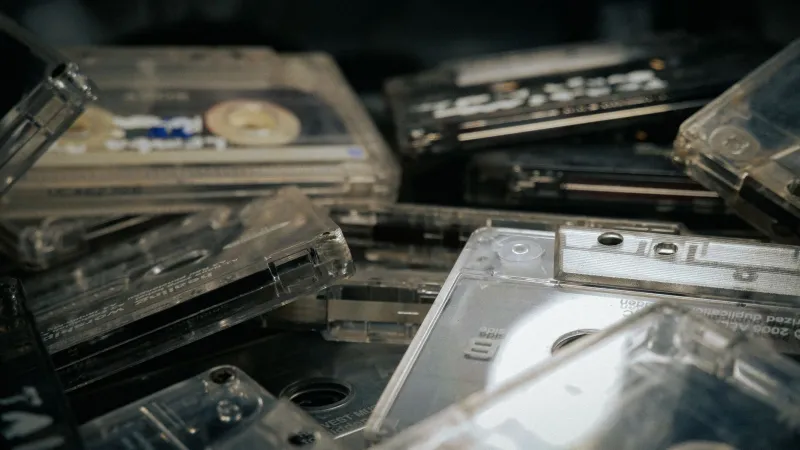
There's a cassette floating around certain corners of the internet that allegedly captures a full Phish set from a 1993 Vermont barn show that was shut down by local police before the encore. Nobody who wasn't there that night can verify it. The recording is muddy, the crowd noise drowns out the bass, and the tape itself has been dubbed so many times that it hisses like a radiator. And yet, within specific collector circles, it trades like gold.
This is the world of bootleg concert tape collecting—a subculture that operates in the margins of the music industry, governed by its own rules, its own ethics, and its own economy that has nothing to do with streaming royalties or label licensing deals.
The Archive That Shouldn't Exist
Long before anyone was uploading concert footage to YouTube or posting setlists to live-music databases, there were tapers. These were the fans who showed up to shows with equipment stuffed into backpacks, microphones tucked into hats or hidden inside foam cups, capturing performances that the labels never sanctioned and the venues never approved. The practice goes back to the early seventies—Grateful Dead fans were among the first to organize it into something resembling a community—but it never really stopped.
What's different now is the infrastructure. The internet gave these collectors a global marketplace for something that used to be strictly local. But here's the thing: a lot of the most serious traders have deliberately stayed off the major platforms. They operate through private forums, encrypted Discord servers, and old-school listservs that look like they were built in 2003 and maintained with pure spite. The vibe is intentional. Obscurity is a feature, not a bug.
"If you can find it with a Google search, it's already been compromised," says one collector who goes by Daltrey_Nevermet online and has been trading tapes since the mid-nineties. "The whole point is that you have to know someone, or you have to earn it."
The Code
There are rules in this world, and they matter more than you'd think. Most serious trading communities operate under what they call a "no-sell" policy—meaning recordings are never exchanged for money. You trade tape for tape, or you do what's called a "B&P" (blanks and postage), where someone sends you blank media and covers shipping in exchange for a copy of a recording they want. Monetizing the archive is considered a betrayal, and people get blacklisted for it.
This isn't just idealism. It's also a legal calculation. The moment cash changes hands on an unauthorized recording, you've crossed into territory that music industry lawyers actually care about. As long as it's a pure cultural exchange—fan to fan, no profit—the major labels have historically looked the other way, particularly for artists who have explicitly permitted taping at their shows. But even for artists who haven't given that blessing, the enforcement landscape has always been uneven.
"The labels go after the people selling bootleg CDs at record fairs," explains one collector who asked to remain anonymous. "They've never really gone after the tapers themselves. We're not their enemy. We're their most devoted customers."
What's Actually Being Preserved
The catalog of recordings these communities maintain is genuinely staggering. We're talking about canceled festival sets that exist on nothing but a minidisc someone carried out of a field in upstate New York. Surprise guest appearances at tiny club shows that the artist's own management has no documentation of. Early performances by musicians who later became famous, captured before they had a press agent or a publicist or anyone to control the narrative.
Some of this material has real historical weight. There are recordings in circulation that document pivotal moments in American music—regional scenes that never got proper documentation, touring lineups that only existed for a few months, one-off collaborations between artists who never officially worked together. The stuff that falls through the cracks of official release schedules and label archives.
Daltrey_Nevermet describes finding a cassette of a 1988 show by a now-defunct Chicago post-punk band that no music historian had ever documented. "There were maybe forty people at that show. The venue doesn't exist anymore. The band broke up six months later. That tape is the only evidence that night happened. That matters to me."
The Gear Cult
Ask a serious taper about their equipment and prepare to lose an hour. There is a deep, almost religious reverence for specific microphone models—the Neumann KM 184 comes up constantly—and for the recording devices themselves. Minidisc players from the early 2000s are particularly prized, especially Sony models that were discontinued years ago. People repair them, stockpile spare parts, trade them almost as eagerly as the recordings themselves.
The format wars within the community are their own universe. Cassette loyalists argue that analog tape captures something digital can't. Digital advocates counter that minidisc recordings from the right equipment are indistinguishable from soundboard recordings. There are people who still record on DAT—digital audio tape—which was essentially obsolete before most Gen Z music fans were born, and they will defend that choice with the intensity of someone arguing constitutional law.
The gear isn't just functional. It's identity. The equipment you carry to a show signals what kind of taper you are, what era you came from, what you value.
The Gray Zone
None of this is entirely legal, and everyone involved knows it. Unauthorized recording of live performances can technically violate copyright law, venue policies, and in some states, specific statutes about audio recording without consent. The community has developed its own risk calculus around this—certain artists are considered "taper-friendly" and have explicitly or implicitly allowed the practice, while others are known to actively prohibit it, and their shows are treated accordingly.
The legal gray area has actually gotten murkier in recent years as streaming has become the dominant music delivery mechanism. When a bootleg recording ends up on a private server or a torrent site rather than a physical cassette, the legal exposure is theoretically different—and potentially larger. Some older collectors are genuinely wary of the digitization trend, preferring that certain recordings stay physical, stay scarce, stay in the hands of people who understand what they're holding.
Why It Persists
The easy explanation is nostalgia, but that's too simple. Plenty of people in these communities are in their twenties. They didn't grow up with cassettes as a primary format. They came to this world through the music itself—through a band they loved, a show they missed, a recording they stumbled across—and discovered a community that takes live music seriously in a way that Spotify's algorithm never will.
There's also something genuinely countercultural about the whole enterprise that resonates in this particular moment. In an era where every concert is documented on seventeen phones and uploaded before the encore is over, there's a strange power in a recording that isn't available everywhere, that requires effort and connection and trust to access.
The bootleg tape community is, at its core, a signal that refuses to be licensed. And for a certain kind of music obsessive, that's exactly the point.