Suburbia Is Haunted Now: How Gen Z Turned the Cul-de-Sac Into a Paranormal Research Zone
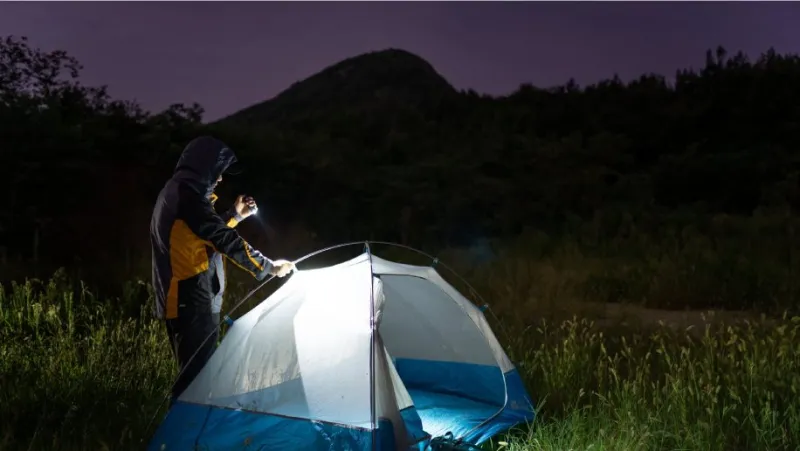
Photo: teenager with flashlight and electronic equipment at night in suburban backyard, via cdn.olightstore.com
There's a kid in Naperville, Illinois who spent last summer rewiring an old AM/FM radio into what he calls a "resonance scanner." His backyard setup includes a weatherproof Pelican case full of salvaged electronics, a thermal camera he bought refurbished off eBay for $80, and a notebook dense with EVP session logs. He has 47,000 followers on TikTok. He is seventeen years old. And he is absolutely not alone.
Across the country — in Phoenix subdivisions, in the outer rings of Atlanta, in the kind of Ohio townships that show up on Google Maps as just a crossroads and a gas station — a loosely connected movement of young paranormal investigators is doing something that the Travel Channel never really prepared us for. They're going local. They're going DIY. And they're going deep.
The Democratization of the Weird
For most of the 2000s and 2010s, paranormal investigation was a televised spectacle. Shows like Ghost Hunters, Ghost Adventures, and their dozens of imitators gave the hobby a specific aesthetic: night-vision green, dramatic music stings, professional-grade equipment wielded by charismatic leads in branded jackets. The implicit message was that this stuff required resources, credentials, and access to suitably cinematic locations — old asylums, Civil War battlefields, that one hotel in Colorado everyone already knows about.
What those shows never really advertised was that the underlying technology was getting cheap fast. K-II EMF meters now run under thirty bucks on Amazon. Full-spectrum cameras have become a genuine hobbyist category. Spirit box apps — software that rapidly scans radio frequencies to produce the white-noise stutter that some investigators interpret as spirit communication — are free downloads. The barrier to entry has essentially collapsed, and Gen Z, raised on the DIY ethos of YouTube tutorials and maker culture, noticed.
"I didn't have the money to go somewhere famous," says one 19-year-old investigator who documents her sessions in the suburban Sacramento area under the handle @staticgirl_speaks. "But I started reading about how location isn't really the point — intention is. And I thought, okay, my neighborhood has been here since 1987. That's not nothing. People lived and died here."
That reframing — from spectacular location to any location — is maybe the most significant philosophical shift in how this generation approaches the paranormal.
Homemade Hardware and the Spirit of the Maker Movement
Walk through the right corners of Reddit (r/Paranormal, r/GhostHunting, the surprisingly active r/DIYParanormal) and you'll find build threads that look like they belong on a hardware hacker forum. Schematics for modified Faraday cages. Instructions for converting old police scanners. Debates about whether a Raspberry Pi running custom audio analysis software is more reliable than commercial ghost detection gear.
The crossover with maker culture is real and it's deliberate. These aren't kids who stumbled into the paranormal from nowhere — many of them came through electronics hobbyist communities, through amateur radio, through the kind of technical curiosity that used to funnel teenagers into ham radio clubs. The difference is the application.
"Ghost hunting gave me a reason to actually learn electronics," one 22-year-old in suburban Dallas told a Discord server that Fringe Signal monitored for several weeks. "I'd been messing around with Arduinos for years but I never had a real project. Now I'm building stuff I actually care about."
The devices they're producing range from the rudimentary to the genuinely inventive. Some are basically just hacked radios. Others incorporate machine learning audio classifiers that flag unusual frequency patterns in recorded sessions. One particularly prolific builder in the Pacific Northwest has designed what he describes as a "geomagnetic anomaly logger" that runs continuously in his garage and uploads data to a shared community database.
Whether any of it actually detects anything supernatural is, of course, the question that nobody in this community agrees on — and that's kind of the point.
Believers, Skeptics, and the Ones Who Just Like the Vibe
Spend enough time in these communities and you'll notice that the epistemological range is enormous. Some participants are committed believers who approach each session with genuine spiritual seriousness, drawing from traditions ranging from Catholic demonology to chaos magic to Indigenous cosmologies. Others are functioning skeptics who find the methodology interesting and enjoy the community without necessarily buying the metaphysics. And a substantial chunk are what you might call vibe-first investigators — they love the aesthetic, the late-night energy, the collaborative weirdness of it, and they've decided that the question of whether ghosts are "real" is less interesting than the experience of looking for them.
This pluralism is one of the things that separates the backyard paranormal movement from its TV predecessors, which tended to perform certainty. The new generation is more comfortable with ambiguity. "I don't need to prove ghosts exist," @staticgirl_speaks said in a video that got nearly 200,000 views. "I just need to show you what I found and let you decide."
That stance — document, share, don't adjudicate — has proven enormously effective on social media. It invites participation rather than demanding belief.
The Neighborhood as Text
There's something almost ethnographic about the way the best of these investigators approach their local areas. They research property histories through county records. They interview elderly neighbors. They cross-reference old newspaper archives with locations where they've logged anomalous readings. The suburban landscape, usually treated as the definition of the unremarkable, becomes a kind of palimpsest — layers of history barely visible beneath the uniform lawns and ring doorbell cameras.
In this sense, backyard occultism is doing something that mainstream paranormal entertainment never really bothered with: it's making the familiar strange. It's arguing that the weird isn't somewhere else, in some photogenic ruin. It's right here, under the surface of the ordinary, waiting for someone patient enough to look.
Whether that's a spiritual claim or a poetic one, it's a genuinely compelling idea. And judging by the follower counts, the Discord membership numbers, and the increasingly sophisticated equipment these kids are building in their garages, a lot of people find it worth tuning in for.
The cul-de-sac, it turns out, has been broadcasting all along. Someone finally thought to listen.