Spell Check: WitchTok's Booming Business and the Elders Who Aren't Having It
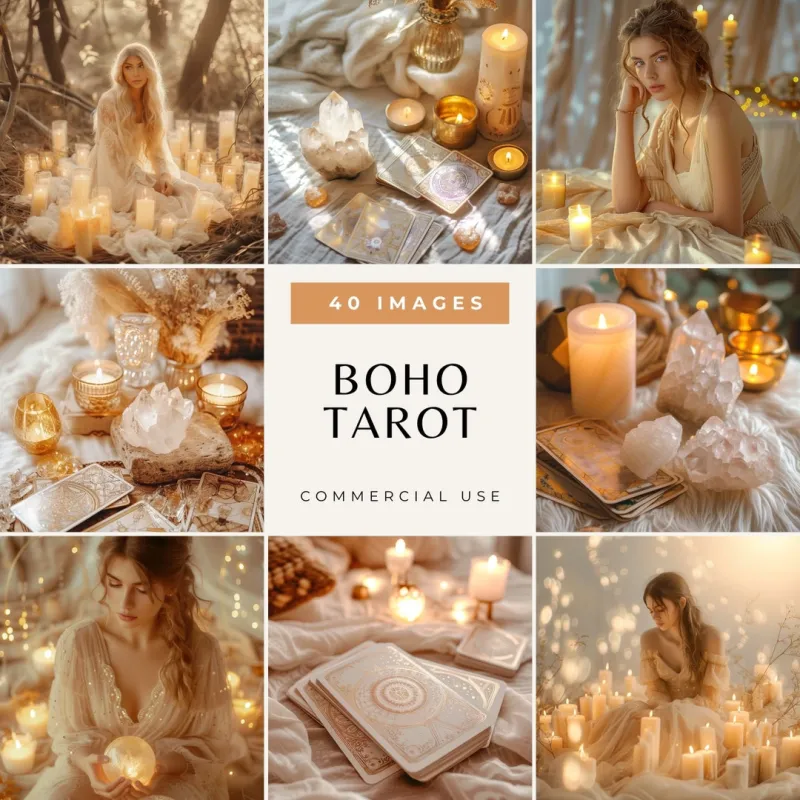
Photo: young woman tarot cards candles mystical aesthetic bedroom, via i.etsystatic.com
Somewhere between a crystal unboxing and a sped-up tarot pull, a twenty-two-year-old in a floral bedroom is explaining how to banish a toxic ex using items from the dollar store. She has 340,000 followers. The comments are full of heart emojis and "omg this actually worked" testimonials. She posted three times today and has a Linktree in her bio that leads to a Patreon, a Shopify store, and a PDF grimoire for $14.
This is WitchTok in 2024 — sprawling, monetized, and genuinely fascinating to watch from the outside.
The numbers aren't small. The hashtag #witchtok has cleared over 30 billion views. Tarot content, spell tutorials, and manifestation guides have become reliable traffic engines for a new class of creator who sits somewhere between lifestyle influencer and spiritual guide. For a lot of younger Americans, this is their first real exposure to esoteric practice — not through a dusty paperback at a used bookstore, but through a fifteen-second clip with a trending sound underneath it.
That accessibility is either the best thing to happen to the occult or the beginning of its slow cultural death, depending on who you ask.
The Algorithm Doesn't Care About Your Lineage
For creators who built their audiences from scratch, the appeal of WitchTok is straightforward: it lowers the barrier to entry in a space that historically kept people out. Expensive books, hard-to-find herbs, initiation requirements, closed communities — the traditional pathways into witchcraft weren't exactly welcoming to someone who grew up in rural Ohio without a metaphysical shop within a hundred miles.
"I learned everything from YouTube and Pinterest before I ever touched a real book," says one creator who runs a popular tarot channel and asked to be identified only by her craft name. "TikTok just made it faster and more social. People feel like they're learning together instead of alone in their bedroom hoping they're doing it right."
That communal energy is real and worth taking seriously. Comment sections on WitchTok videos function like impromptu study groups — people sharing results, asking follow-up questions, correcting each other. There's a genuine exchange happening, even when the original content is thin.
But thinness is exactly the problem, according to practitioners who've spent years or decades inside traditions that don't compress well into sixty seconds.
What Gets Cut in the Edit
Maria, a practicing Wiccan high priestess based in New Mexico who's been in the craft for over twenty years, has watched WitchTok with a mixture of amusement and genuine frustration. She's been approached by younger practitioners who learned their entire foundation from viral videos and arrived with confident misconceptions baked in.
"The algorithm rewards drama and certainty," she says. "So you get these videos that are like, 'do THIS spell and your manifestation will come in three days.' That's not how any of this works. There's nuance, there's ethics, there's years of building a relationship with your practice. None of that fits in a trending audio clip."
The commercialization layer adds another complication. Spiritual supply has always been a market — occult shops, mail-order catalogs, professional readers — but the speed and scale of TikTok's economy has created something different. Creators are incentivized to produce content that sells products, which means practices get shaped around what photographs well and ships easily rather than what's actually meaningful.
There's also a thornier issue sitting underneath all of this: the question of which practices are being borrowed, from whom, and whether anyone asked. Some of the most viral content pulls from closed or culturally specific traditions — Hoodoo, Santería, Indigenous plant medicine — and strips them of context entirely. That's not a new problem in American spiritual culture, but TikTok accelerates it dramatically.
The Gatekeeping Debate Is Real and Also Kind of Complicated
Here's where it gets messy, because not everyone who criticizes WitchTok is coming from a place of pure tradition-preservation. Some of the loudest "gatekeeping" voices online are themselves content creators with merchandise stores, which raises obvious questions about who's protecting the craft and who's protecting market share.
The younger creators aren't oblivious to this dynamic. "Every generation thinks the next one is doing it wrong," argues one creator who makes witchcraft content specifically aimed at beginners. "If someone finds a path into spirituality through a TikTok and it leads them somewhere real, who am I to say that doesn't count?"
That's a fair point. American religious and spiritual history is full of practices that got simplified, commercialized, and eventually found their way to people who made them genuinely meaningful. The self-help movement, yoga's journey into suburban fitness studios, the mainstreaming of meditation — none of these translations were clean, and all of them produced something that the original practitioners might not fully recognize.
WitchTok is probably following the same arc. The question isn't really whether it's happening — it clearly is — but what survives the compression.
The Signal Worth Tuning Into
What's genuinely interesting about WitchTok, beyond the discourse, is what it reveals about a generation looking for something that organized religion largely stopped offering them: ritual, community, a sense of agency over an unpredictable world. The spell-casting and manifestation content isn't really about magic in the way traditionalists understand it. It's about giving people a framework for intention and action when everything else feels chaotic.
That's not nothing. It might even be the oldest function of esoteric practice, just running on a new server.
The creators who seem to be doing it best are the ones who hold both things at once — the accessibility that makes TikTok useful and the honesty about how much gets left out of a short-form tutorial. "I always tell people my videos are a door, not a destination," says one tarot creator with a genuinely thoughtful approach to her content. "If you're only here for the algorithm, you're going to miss the whole thing."
The elders might not be entirely wrong. But neither are the kids in the floral bedrooms. And the tension between those two truths is probably the most honest thing WitchTok has accidentally produced.