Glitch Is Gospel: Inside the Obsessive World of VHS Collectors Who Only Want the Broken Stuff
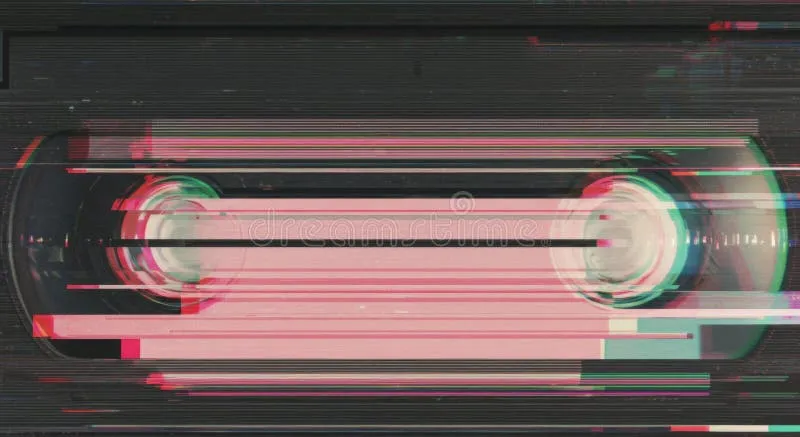
Photo: damaged VHS tape with magnetic decay and glitch artifacts, via thumbs.dreamstime.com
There's a guy in Portland who recently dropped $400 on a VHS tape of Mausoleum — a 1983 direct-to-video horror film you've never heard of — because the picture quality was so destroyed by magnetic decay that half the runtime looks like a fever dream painted by a broken television set. He didn't want a clean copy. He specifically didn't want a clean copy. The degradation, he'll tell you, is the whole artifact.
This is the part of the collector's market that doesn't make sense until it suddenly makes all the sense in the world.
The Tape Isn't Dead. It's Haunted.
VHS collecting has been a thing for a while now — thrift store hunters, horror nerds, and nostalgia chasers have kept the format alive in a low-key way for years. But something shifted in the last three or four years, and it's not just the usual retro revival cycle. A specific subculture has broken off from the general collector crowd and gone somewhere stranger: they're actively seeking out tapes that are damaged.
We're talking magnetic dropout lines cutting through the image like lightning. We're talking audio that warps and slows like a cassette left on a hot dashboard. Color bleed, tracking errors, ghost images from recordings that weren't fully erased. And the holy grail for a certain type of collector: the tape that was recorded over so many times that multiple eras of American home video life are literally layered on top of each other — a kid's birthday party bleeding through the final act of a rented action movie, a local news broadcast haunting a home-taped soap opera.
These tapes aren't broken. They're documents.
Why Imperfection Costs More Now
The market for degraded VHS is genuinely weird to navigate if you're coming at it from a traditional collector mindset. Condition is usually everything in collectibles — a pristine copy commands the premium. But here, the economics are inverted. On eBay, in private Discord servers, through dealers who operate more like curators than resellers, the asking prices for truly wrecked tapes can climb into the hundreds. Blank tapes — especially certain late-80s and early-90s brands like Maxell HGX-Gold or TDK T-160s that have developed specific aging characteristics — have their own market entirely.
Blank tapes. For the texture of how they degrade.
Derek, a 29-year-old from Albuquerque who asked us to use only his first name, has been sourcing and reselling degraded blanks for about two years. He describes his operation with the casualness of someone who has fully accepted how this sounds to the outside world. "I go through storage units, estate sales, sometimes people just mail me boxes of tapes they were going to throw out. I test everything. The ones that have gone interesting — that's the word I use, interesting — those I sell. The normal ones I usually donate."
Interesting, in Derek's taxonomy, means the polyester base has started to separate from the magnetic oxide layer in ways that create visual artifacts unique to that specific tape. No two degrade identically. "It's like grain in wood," he says. "You're not going to find another one exactly like it."
Gen Z Didn't Grow Up With VHS. That Might Be the Point.
Here's the generational wrinkle that makes this whole thing more interesting: a significant chunk of the people most obsessed with degraded VHS are too young to have meaningful childhood memories of the format. They didn't grow up rewinding tapes or squinting through tracking errors. They encountered VHS as a historical object, not a lived experience.
Which means their relationship to the decay is different. It's not nostalgia in the traditional sense — it's more like archaeology. Or maybe closer to how people feel about analog photography: the imperfection isn't a flaw to be corrected, it's evidence of a physical process that digital technology has essentially erased.
In a culture where everything is backed up, losslessly compressed, and available in 4K remaster, a tape that is actively dying carries a kind of weight that a perfect digital file simply cannot. It had a life. It recorded something. It sat in a box somewhere for thirty years and the physics of the world worked on it and now it looks like that. You can't fake it. You can't restore it back to what it was. It's a one-way door.
"Digital preservation is kind of a lie," says Mara, a 24-year-old film student in Chicago who collects what she calls "terminal tapes" — recordings she estimates have maybe a handful of playbacks left before they deteriorate beyond watchability. "We act like we're saving everything but we're really just making copies of copies. The original experience of watching something in a specific moment in time — that's gone. These tapes have that loss built into them. They're honest about what they are."
The Bootleg Underground
Layered underneath the degraded-tape collector world is a parallel market for VHS bootlegs — unauthorized recordings, regional-only broadcasts, films that were never officially released on home video and exist only in degraded tape form. These aren't just curiosities. For certain lost films, a warped, third-generation bootleg tape is the only surviving record that a piece of work existed at all.
The people hunting these are part archivist, part detective, part hoarder. They trade through private networks that operate with the discretion of people who know they're in legally ambiguous territory. The tapes themselves often arrive with handwritten labels, incomplete information, or no information at all — just a tape in a case with a question mark Sharpied on the spine.
The community around these objects has developed its own language, its own aesthetics, its own canon of legendary finds. There are Discord servers where members post screenshots of particularly beautiful decay. There are arguments about whether digitizing a degraded tape for preservation purposes somehow defeats the point. There are people who refuse to digitize at all — who insist that a tape can only be truly experienced on the hardware it was designed for, in real time, with all the mechanical fragility that implies.
What the Glitch Is Actually Saying
It would be easy to read all of this as pure aesthetics — a vibe, a look, a way of being interesting at parties. And some of it probably is that. But there's something more stubborn underneath it.
We live in a moment of aggressive, relentless digital perfectionism. Everything is optimized, smoothed, corrected, filtered. The cultural products we consume are engineered to be frictionless. And maybe what the degraded-tape obsession is pushing back against — however obliquely, however unconsciously — is the idea that perfection is the goal. That the original experience of a thing is less valuable than the best possible version of it.
A warped tape of a forgotten movie from 1987, recorded on a blank that's been slowly dying in someone's garage since the Clinton administration, is not optimized for anything. It is exactly what it is: a physical object that has been subject to time, and shows it. In an era when we're increasingly surrounded by things that pretend time doesn't happen, that might be the most radical artifact you can own.
The Portland guy with the Mausoleum tape says he watches it once a year. He says it gets a little worse every time. He says that's the point.