Receipt for the End of an Era: The People Hoarding Blockbuster's Paper Trail Like It's Holy Scripture
The paper is thin and a little waxy, the kind that came out of a receipt printer that always needed a new ribbon. The text is faded but still readable: a member ID, a movie title, a return date, and a late fee of $3.99 that nobody is ever going to collect. For most people, this is trash. For Marcus Delray, a 34-year-old from Columbus, Ohio, it's a primary source document.
"People talk about Blockbuster like it's this warm fuzzy memory," he says, holding the receipt up to the light like a jeweler examining a stone. "But this is the actual texture of it. The bureaucracy of it. The little annoyances. That's what I want to save."
Delray is part of a loose, decentralized network of collectors and amateur archivists who are doing something that major cultural institutions mostly haven't bothered with: systematically rescuing the physical paper remnants of defunct Blockbuster Video locations before they end up in landfills. Rental cards. Late fee notices. Membership applications with handwritten phone numbers. Employee scheduling printouts. Even the laminated store policy signs that once hung behind counters across the country.
It's a niche obsession that sits right at the intersection of nostalgia, media history, and the very human urge to hold onto proof that something existed.
The Last Paper Trail of the Video Store Age
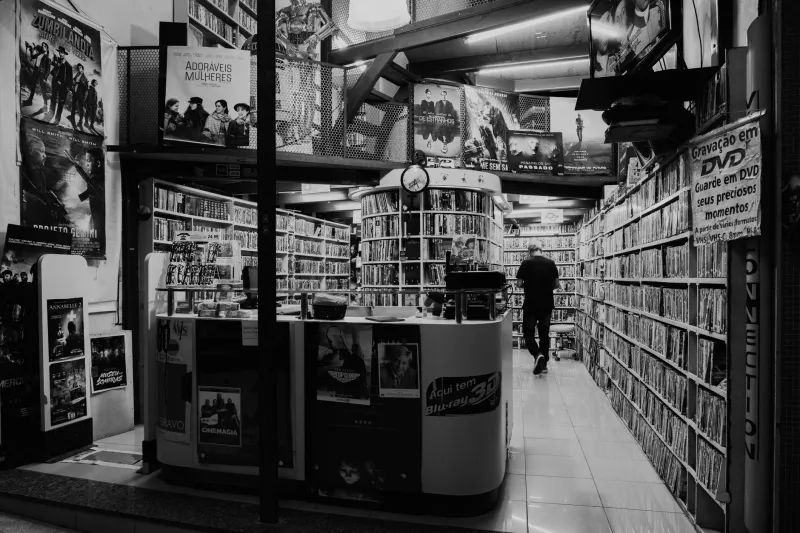
At its peak in the early 2000s, Blockbuster operated over 9,000 stores in the United States. By 2023, exactly one remained — the famous Bend, Oregon location that has since become a kind of secular pilgrimage site. But the paper those thousands of stores generated? Most of it was shredded, composted, or just tossed when locations shuttered. What survived did so almost by accident: in storage units, in the back offices of strip malls that changed hands slowly, in the personal collections of former employees who grabbed a handful of stuff on their last day.
That accidental survival is exactly what makes these objects interesting to people like Priya Hollenbeck, a library science graduate student in Austin who has been documenting what she calls "video store ephemera" for the past two years.
"There's no official Blockbuster archive," she says flatly. "The corporate entity is gone. The infrastructure is gone. What's left is this scattered material record, and most of it is sitting in people's garages or listed on eBay for two dollars."
Hollenbeck has been cataloging everything she can find, building a spreadsheet that currently runs to over 400 individual items: rental agreements, promotional mailers, employee training manuals, even a laminated "Be Kind, Rewind" sign from a location in suburban New Jersey. She photographs everything and uploads it to a shared drive that a small community of like-minded archivists can access.
"The goal isn't to own this stuff," she clarifies. "The goal is to document it before it disintegrates."
What a Rental Card Actually Tells You
The membership card is maybe the most prized artifact in this subculture. Early Blockbuster cards were simple laminated rectangles with a barcode and a member number. Later ones had photos. Some locations had their own regional designs. To a collector, the variation between cards from different eras and different franchise locations is meaningful — a kind of material chronology of how the company evolved and how different communities interacted with it.
But it's not just the cards themselves. It's what they imply. A membership card is a contract, a small bureaucratic agreement between a person and a corporation, mediated by a teenager behind a counter who probably had opinions about your taste in movies. There's something almost intimate about that transaction, and the paper record of it captures something streaming services have completely erased.
"When you open Netflix, there's no friction," says Delray. "No one judges you. No one sees what you're renting. The video store was this semi-public experience. People ran into their neighbors. Employees remembered what you liked. The paper trail from that world is evidence of a different relationship between people and entertainment."
The eBay Pipeline and the Ethics of Salvage
Most of these artifacts enter the collector community through eBay, estate sales, and the occasional lucky find at a Goodwill. Former employees are a significant source — many of them held onto items as personal mementos and are now either selling or donating them. A few collectors have made direct contact with commercial real estate companies that handled the liquidation of shuttered locations, occasionally scoring bulk lots of back-office documents.
The ethics of this salvage operation are genuinely murky. Some of the material includes personal data: member names, addresses, phone numbers, and rental histories. Hollenbeck is careful about this. "We don't publish anything with identifiable personal information," she says. "The cultural artifact is the form, the system, the design — not someone's home address from 2002."
Other collectors are less cautious, and there's an active debate within the community about what responsibility, if any, these self-appointed archivists have toward the privacy of former customers whose data ended up on a piece of paper in a box in a storage unit.
It's the kind of ethical gray zone that formal archives have protocols for. This community is making it up as they go.
Why Now?
The timing of this obsession isn't random. The generation that grew up with Blockbuster as a central feature of weekend life is now in their thirties and forties, old enough to feel the specific ache of losing something that defined a particular kind of American leisure. The video store wasn't just a place to rent movies — it was a social space, a recommendation engine powered by human beings, a physical location that organized the cultural conversation of a neighborhood.
Streaming killed all of that, efficiently and completely. What's left is the paper, and the paper is starting to feel urgent.
"In another ten years, most of this stuff will be gone," says Delray. "The receipts fade. The lamination cracks. The thermal paper goes blank. If nobody's paying attention right now, it just disappears."
Hollenbeck is thinking bigger. She's been in contact with a couple of regional libraries about potentially housing a formal collection, and she's cautiously optimistic that at least some of this material could end up somewhere with proper preservation conditions. "The Library of Congress has pizza boxes in its collection," she points out. "A Blockbuster rental agreement is not a crazy ask."
The Last Blockbuster Knows
The surviving store in Bend has its own relationship with this archival impulse — they sell merchandise, they welcome visitors, they've leaned fully into their status as a relic. But the collectors hunting paper artifacts are after something different than the branded nostalgia the Bend store offers. They want the unglamorous stuff. The shift schedule. The overdue notice. The membership application where someone wrote their phone number in ballpoint pen and crossed it out and wrote a different one.
That's the Blockbuster they're trying to save: not the logo, not the vibe, but the actual texture of how it worked and what it meant to be a customer inside that particular American institution.
The late fee is still $3.99. Nobody's coming to collect it. But somebody's keeping the receipt.