One Hundred Watts and a Dream: The Tiny FM Stations Keeping Local Radio Weird
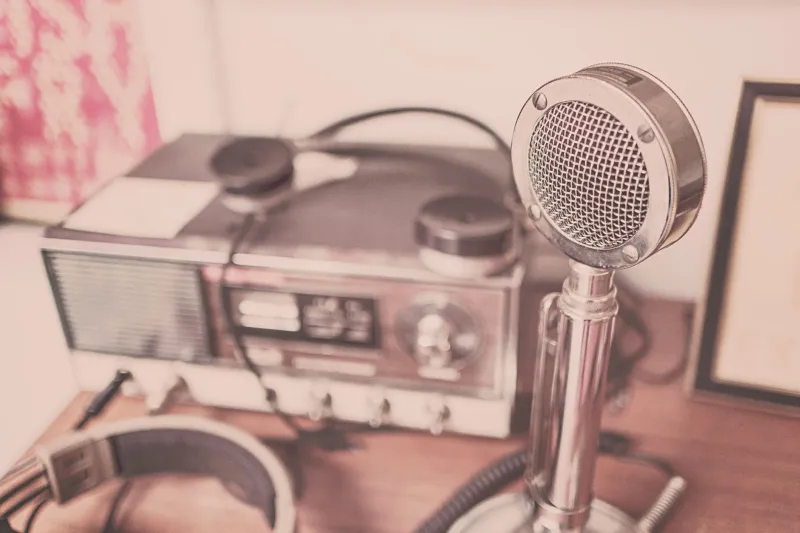
Somewhere outside of Bozeman, Montana, a retired schoolteacher named Darlene is reading community obituaries over a bed of ambient guitar. The broadcast reaches maybe four square miles. There are no ads. There is no algorithm. There is just Darlene, a microphone she bought used off Craigslist, and a transmitter that draws about as much electricity as a decent floor lamp.
This is low-power FM radio. And if you've never heard of it, that's almost entirely the point.
The FCC's Weird Little Gift to the Forgotten
Back in 2000, the Federal Communications Commission did something genuinely surprising: it created a new class of noncommercial radio license specifically designed for community organizations, schools, churches, and local nonprofits. Low-power FM — LPFM, in the shorthand — caps transmitter strength at 100 watts, limits broadcast range to a radius of a few miles, and prohibits commercial ownership. No Clear Channel. No iHeartMedia. No syndicated morning zoo crews.
The idea was to carve out space on the dial that corporate consolidation had completely swallowed. And for a while, the big broadcast lobbies fought it hard, arguing that these micro-stations would bleed into existing signals and cause interference. Spoiler: they mostly didn't. After a decade of legal wrestling, Congress expanded the LPFM program significantly in 2011 with the Local Community Radio Act, and a new wave of licenses started flowing to the kinds of people who actually give a damn about their neighborhoods.
Today there are roughly 2,000 licensed LPFM stations operating across the United States. Most of them, you have never heard of. That's not a bug.
Hyperlocal to the Point of Being Almost Private
Walk into the studio of WXOX in Louisville, Kentucky — one of the more celebrated LPFM operations in the country — and you'll find a place that looks less like a radio station and more like a community art project that accidentally got a broadcast license. Local musicians, poets, political organizers, and self-described weirdos rotate through the mic. There's a show dedicated entirely to Louisville's underground wrestling scene. Another one plays nothing but field recordings made within city limits.
That kind of programming doesn't exist on commercial radio because it can't make money. But LPFM stations aren't trying to make money. They're trying to make something, which turns out to be a radically different goal.
In rural West Texas, a station run out of a converted feed store plays conjunto and norteño music six days a week because the nearest Spanish-language commercial station is 90 miles away. In a small city in Appalachia, an LPFM run by a local arts nonprofit has become the de facto archive for regional folk musicians who've never been recorded anywhere else. In a Chicago neighborhood, a station that started as a high school broadcasting club now covers city council meetings that the local paper no longer has the staff to attend.
These aren't edge cases. This is the whole movement.
The People Who Actually Run These Things
The volunteer DJ is a specific kind of human being. Dedicated in a way that borders on inexplicable. Happy to spend a Saturday afternoon in a room the size of a large closet, talking to an audience they'll never fully meet, about things that matter to approximately nobody outside a three-mile radius.
Marcus has been doing a two-hour blues program on a small LPFM in Mississippi for going on six years. His show airs on Sunday mornings at 8 a.m. He has received, in that time, maybe forty phone calls from listeners. He considers this a sign the show is working.
"If I had a thousand listeners, I'd have to start thinking about what they wanted," he says. "This way I just play what I love and whoever's out there either gets it or they don't."
That ethos — play what you love, broadcast into the void, trust that the void contains at least a few people who needed exactly this — runs through the LPFM world like a signal through copper wire.
Station operators deal with genuinely unglamorous logistics. Transmitter maintenance. FCC paperwork. Volunteer coordinators who ghost. Equipment that was already secondhand when they bought it. Fundraising drives that bring in enough to keep the lights on and not much else. It is not a sustainable career. It is barely a sustainable hobby. And yet the stations keep broadcasting.
What Corporate Radio Killed and LPFM Is Slowly Reviving
There's a reason people over a certain age get misty-eyed talking about radio. Not because the medium is inherently magical, but because there was a period — before the Telecommunications Act of 1996 opened the door to mass consolidation — when local radio was genuinely, chaotically local. When a DJ could play something weird because they felt like it. When a station might cover a high school football game and then pivot to an experimental jazz block at midnight.
All of that got sanded down. The playlists got centralized. The personalities got replaced by voice-tracked automation. Entire markets now run on programming recorded in another state by someone who has never set foot in the city whose call letters they're using.
LPFM is not a nostalgia project, exactly. But it is a refusal. A refusal to accept that radio has to be wallpaper. That local culture has to be mediated through platforms headquartered somewhere else. That the only thing worth broadcasting is whatever some analytics dashboard decided people in your demographic are statistically likely to tolerate.
Finding the Signal
If you want to find your nearest LPFM station, the FCC's station database is public and searchable. You can also check with the Prometheus Radio Project, a Philadelphia-based nonprofit that has spent decades helping communities navigate the licensing process and build stations from scratch. Their resources are genuinely excellent and their politics are approximately what you'd expect from an organization named after the guy who stole fire from the gods.
Some LPFM stations stream online, which extends their reach beyond the physical broadcast footprint. But a lot of operators are ambivalent about this. The whole point, for many of them, is the specificity of place. You're in the signal or you're not. There's something almost intentionally inconvenient about it, and that inconvenience is doing real work — it keeps the audience small, committed, and genuinely local.
In an era when every platform is desperately trying to scale, 100 watts and a four-mile radius is a genuinely radical act.
Darlene is still on the air in Montana, by the way. She does her show every Tuesday and Thursday afternoon. If you're in the right part of the valley and you tune to the right frequency, you might catch her reading a poem someone dropped off at the station earlier that week. Or playing a recording of a local choir that performed at the high school last spring. Or just talking, in that unhurried way that radio used to allow, about something that happened in town that she thought people should know about.
Four miles. A hundred watts. Completely unlisted on any streaming platform.
Still broadcasting.