Feral by Design: The American Arcade Refused to Die, So It Mutated
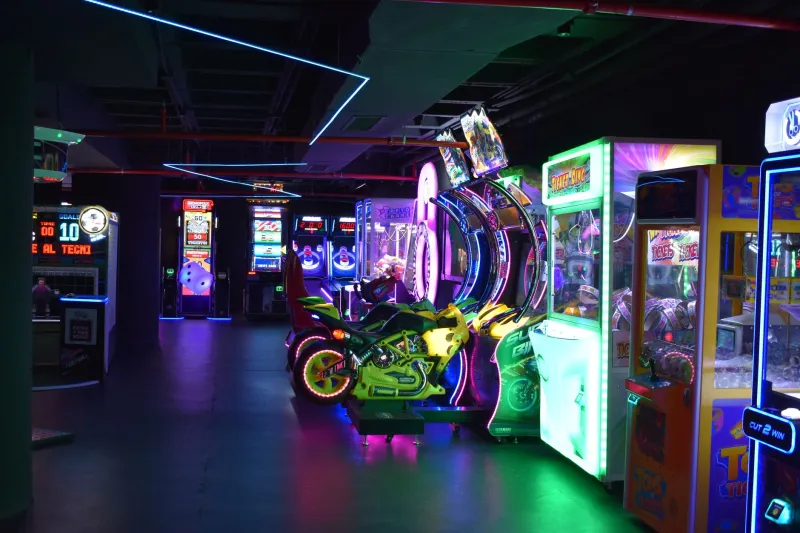
Let's get one thing straight: the arcade never died. It went feral.
The clean, fluorescent, food-court version — the one with the carpet pattern and the birthday party packages — that arcade is extinct. But the machines themselves? They're alive, and they're thriving in ways that would horrify a corporate regional manager. They're in shuttered boardwalk halls and dive bowling alleys, run by whoever has the keys and the nerve, and the culture around them has gone gloriously weird.
The Ticket Barons
Every surviving arcade has its regulars, and the regulars have a hierarchy, and at the top sit the ticket people. These are the folks with shoeboxes of redemption tickets going back years, who know the payout tables of every claw machine and the exact mechanical mood swings of the coin pusher by the door. They don't play for prizes. Prizes are for amateurs. They play for the number.
There's a gray economy here that nobody talks about in polite terms: tickets get traded, stashed, sometimes quietly sold. A regular with a six-figure ticket count is carrying, functionally, a private currency backed by a prize counter and pure social contract. It's a stock market with sticky floors.
The Repair priesthood
Here's the part of the arcade world that deserves a medal: the fixers. The men and women keeping 40-year-old cabinets breathing with scavenged boards, eBay harnesses, and knowledge that exists nowhere in any manual. When a 1987 skee-ball lane dies, there's no support line. There's a guy named Ray who drives two hours with a crate of switches and a philosophy about capacitors.
These technicians are the real reason the feral arcade exists at all. Every working cabinet is a small act of stubborn maintenance against entropy — a machine kept running through pure craft, long after any manufacturer stopped caring.
Hacking as a Varsity Sport
And then there are the teenagers, who have turned the redemption counter into a competitive discipline. Cabinet manipulation — timing the ticket dispenser, reading the claw motor's rhythm, exploiting a coin pusher's weight distribution — is a skill ladder as legitimate as any esport, and considerably more hands-on. The best of them can walk into a strange arcade and, within an hour, understand its machines better than the person who owns them.
Is it cheating? Depends who you ask. The operators mostly shrug, because a kid who can beat the pusher reliably is also a kid who brings twenty friends on a Friday night. The line between exploiting a machine and mastering it has always been drawn in chalk.
My Argument, Stated Plainly
The arcade didn't collapse because kids stopped wanting to play. It collapsed because the business model got boring, and boring is fatal. What survived is the un-boring version: scrappier, weirder, locally owned, and slightly lawless. The feral arcade is the arcade with the corporation removed — just machines, misfits, and a prize counter run on honor.
Honestly? It's better this way. The mall arcade was a product. This thing — sticky, strange, half-broken, fully alive — is a place. And America keeps a few of them open in every coastal town and dying strip mall, mostly out of spite.
Long may they beep.